

AI-assisted visual production
A clear visual direction. Generated images and motion shaped into work that belongs to your brand.
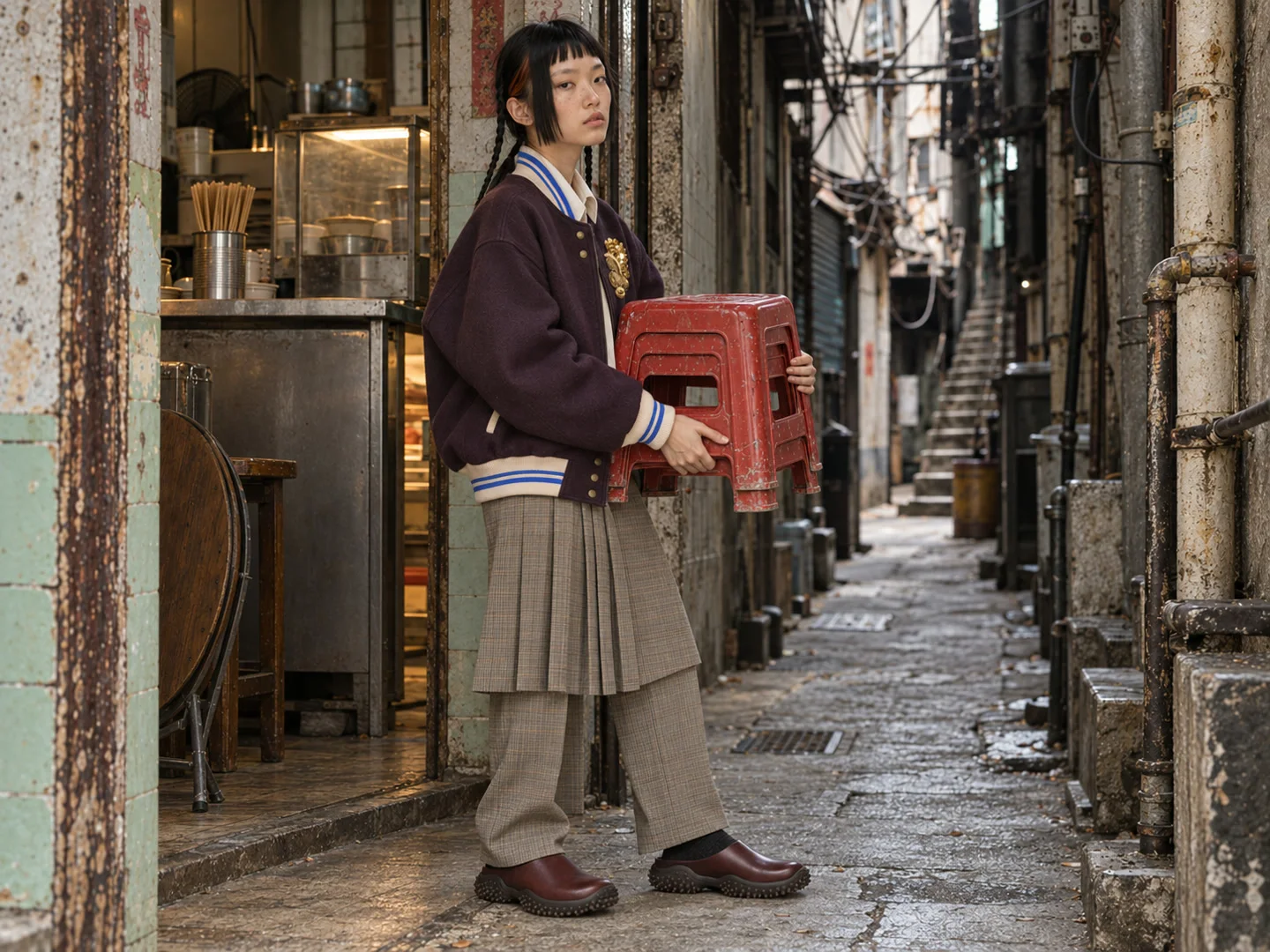

Art direction stays in the picture.
Real clothing, fictional models and a Hong Kong setting.
Actual generated work from the studio. Fictional subjects, deliberately directed.
Work behind the service
Explore the journal

From the first conversation to the handover.
Set the direction
Agree references, constraints and how the work will be used.
Develop and select
Generate, compare and refine with editorial judgement.
Finish the piece
Prepare the chosen imagery or motion for the agreed formats.
Use the technique for a visual reason
AI can help explore a scene, transform an image or develop a moving treatment. The useful question is what the technique contributes to this particular brief. We start with the look and the intended use, then test a small piece before expanding the production.
What the work can include
Visual research, concept frames, image generation, controlled variations, motion tests and an agreed edit. Photography, live action and generated material can be combined when the brief calls for it.
Review happens through actual frames and clips. We agree the subjects, source material and acceptance criteria before treating a generated result as a deliverable.
Source material and delivery
The proposal identifies what you provide, what is created and which tools or third-party assets are involved. Rights, likeness permissions, disclosure requirements and final usage need to be resolved for the specific project.
The examples below show creative experiments and studio work. They are useful references for a conversation about technique and direction, not a promise that every shot can be reproduced on demand.
A few things you might be wondering.
Is every visual generated?
The approach can combine generated imagery, real assets and conventional production. The brief determines the mix.
Can you guarantee an exact generated result?
We establish the required constraints and test the difficult parts early. Selection, iteration and finishing are part of the process.
Bring the image you have in mind.
Bring the task, the people using it and the systems it needs to work with. We'll define the scope and the next useful step.
Discuss your project