
technology
Dead Poets: an AI gallery for the bar's toilet
- We created AI portraits for a Polaroid wall in Dead Poets’ toilet.
- The pictures imagine famous artists enjoying cocktails in the afterlife.
- A companion website turns the collection into a gallery you explore by scrolling.
Dead Poets gave us a good place for an AI art project: the toilet. The Hong Kong bar’s name already suggested the cast. The premise supplied the rest. Imagine the departed having a drink, then following the same bathroom routine as the living.
We made portraits around that idea and built a website for the collection. These are AI-generated fictional scenes. The gallery introduces names including Grace Kelly, Bruce Lee and Robin Williams under the heading “AI Generated Memories.”
The joke takes about a second to understand. Then you can look at the pictures.
Give the pictures somewhere to belong
The Polaroid-wall format gave the project a physical home. You’d encounter the collection while visiting the bar, in a room that echoes the subject of the images. The bathroom belongs to the premise.
In the example below, the cocktail glass, towel and bathroom tiles do as much work as the portrait. Those small details make the impossible scene feel like a casual photograph someone might have left in an album.
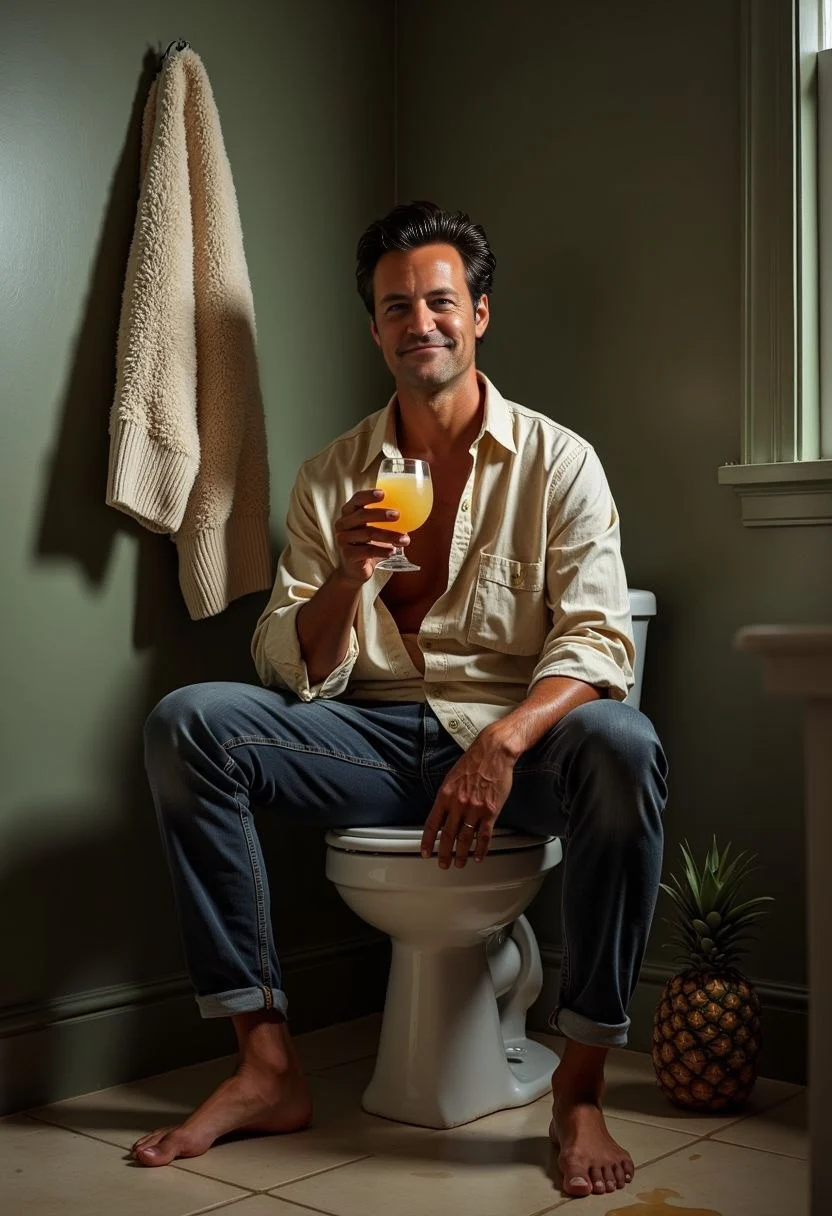
Original AI-generated artwork from the project, not a photograph of a real event.
You can get lost in model settings with a project like this. I find the place a better starting point. A picture for this wall has to make sense beside the other pictures and inside Dead Poets. The shared premise gives you a way to judge what belongs in the collection.
Carry the room onto the web
The companion gallery opens with the project’s title and a neon cross. Scroll through the first grid and the pictures tilt in perspective. The artists’ names pass across the screen, followed by “Welcome to the Toilet” and another arrangement of the collection.
We used HTML, CSS and JavaScript for the site, with GSAP and ScrollTrigger for the motion. CSS transforms create the depth. The animation builds on Codrops’ staggered grid experiment , adapted around the portraits and the bar’s visual world.
Visitors browse a chosen set of images. That matters to the experience: we can arrange the collection, set the pace and let someone look through it without asking them to invent a prompt. The web gallery gives the artwork another place to be seen after someone leaves the venue.
For me, this is the useful connection between creative work and software. You start with a place, a premise and something worth looking at. Then you build the way people encounter it. Poetify took a different form, a music player, around another specific creative idea.
If you’re planning something for a venue, start with the space you want to change . A wall, a menu or the route to the bathroom gives us a much better brief than “we should do something with AI.”
Interested in this?
Learn about Technology →