

AI workflow automation
Less copying. A clearer process.
Let software prepare and route the work. Keep a clear place for the decisions people need to own.
Collect the agreed files, draft the notes and request a review.
Follow a request through the system.
A request arrives with the information the workflow needs.
Interactive example. Step through the flow, including the review point.
Work behind the service
Explore the journal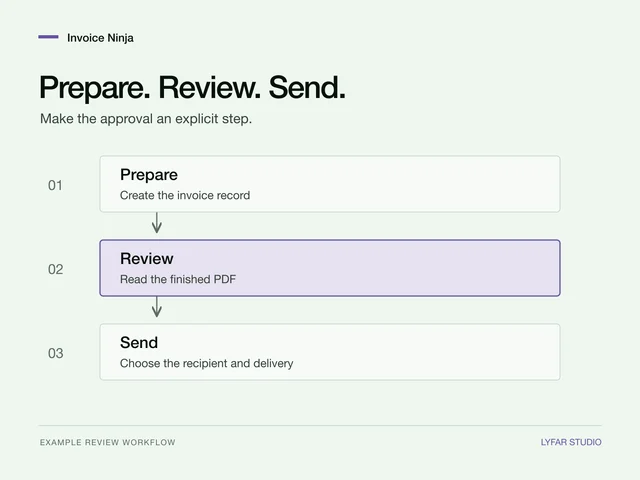
From the first conversation to the handover.
Map the real process
Identify the inputs, handovers, exceptions and responsible people.
Build a bounded workflow
Connect the tools and keep human decisions explicit.
Test it with real cases
Review normal cases and failures before agreeing how it will operate.
Follow one task from start to finish
An enquiry arrives. Someone reads it, copies details, looks up a record and prepares a response. Before adding AI, we map that sequence and identify which parts follow rules and which require interpretation.
Rules can handle deterministic steps. A model can help with classification, extraction or drafting. The workflow needs to record what happened and send exceptions to a person who can resolve them.
A useful first implementation
- One defined trigger and a clear set of input records.
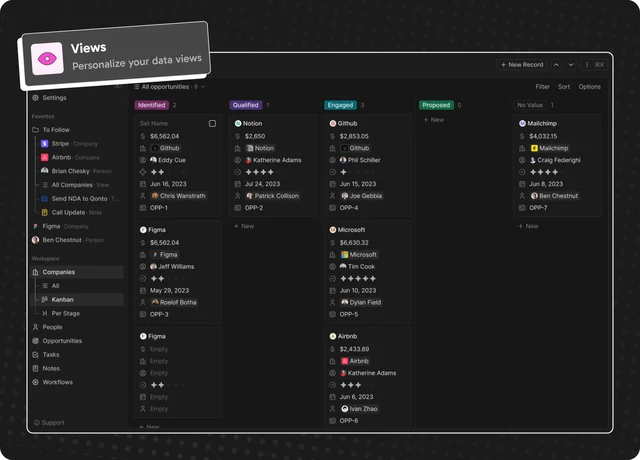
- The connections to the tools your team actually uses.
- A draft, proposed update or prepared document you can inspect.
- An approval step before any agreed consequential action.
- A record of failures, retries and completed work.
Test with representative work
We use sample cases, including awkward ones, to assess accuracy and effort. The first question is whether the workflow produces something your team can use. Time savings and ongoing costs should be measured against your process, not assumed from a demo.
Delivery and operation
The scope identifies credentials and access ownership, who handles exceptions, and how the workflow will be monitored. The studio examples below distinguish working tools from proposed client integrations.
A few things you might be wondering.
Does every step need AI?
No. Rules and ordinary integrations often handle part of the process better. We use AI where it adds something useful.
Can people stay in the loop?
Yes. Review and approval steps are designed into the workflow where judgement or external action needs them.
Tell us what you're building.
Bring the task, the people using it and the systems it needs to work with. We'll define the scope and the next useful step.
Discuss your project