

technology
Swarm: six directories, two we still support

Swarm is a completed Hong Kong directory project. We built one engine for six subjects, then stopped developing the wider network. Ongoing support now covers Headhunter and WATER .
The wider network is now archived project work. The shared engine and the lessons from building it remain useful.
What we kept
A recruitment directory helps you shortlist firms. A water-services directory helps you find someone for a very different problem, ideally before the ceiling gets involved.
Both came from the same engine.
Swipe across the table to compare all columns.
| Directory | Listings | Guides |
|---|---|---|
| Headhunter | 144 firms | 15 |
| WATER | 35 providers | 5 |
These are the counts displayed on the two sites on 16 November 2026. They describe directory content, not customers or traffic.

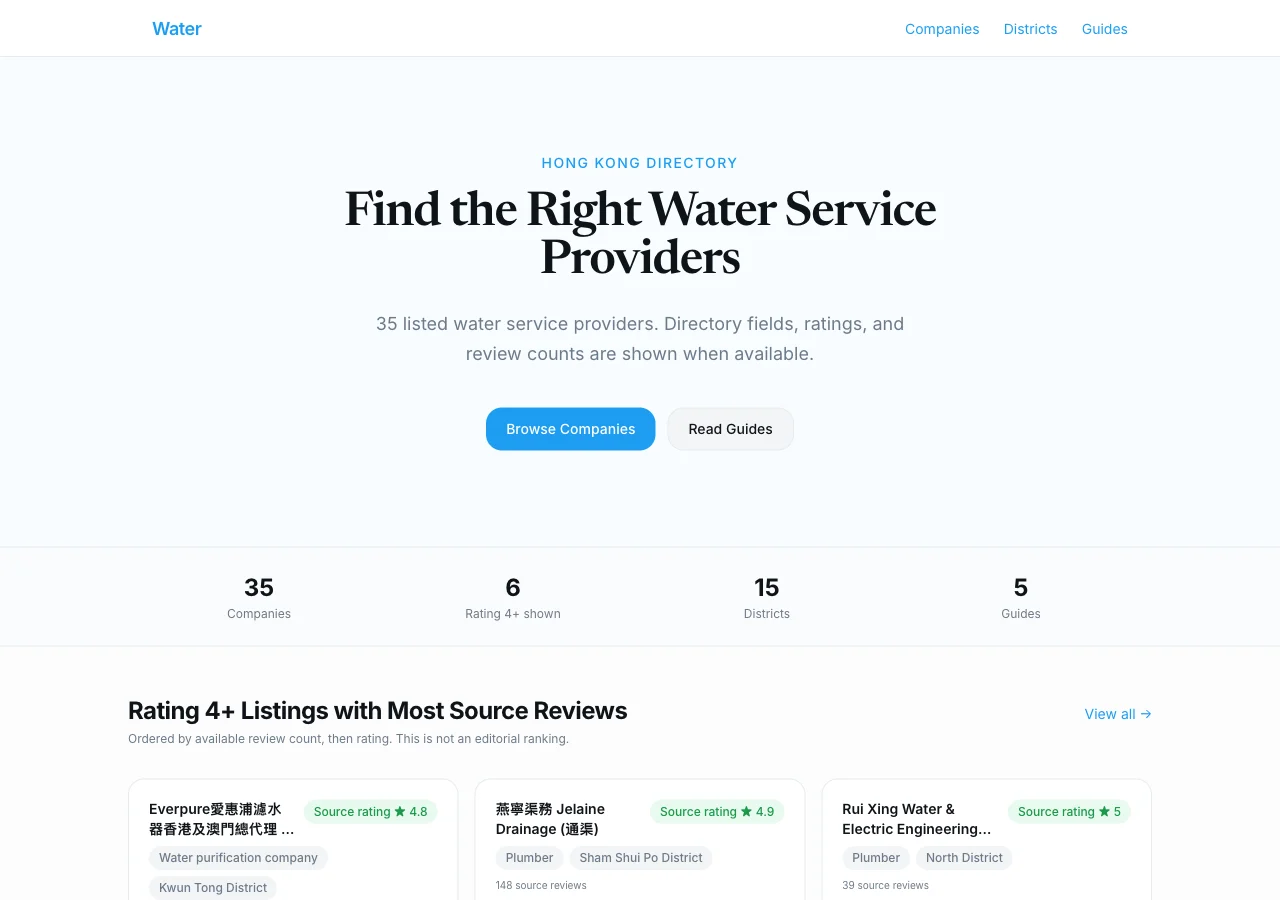
The original six subjects were recruitment, water services, education, audit, renovation and warehousing.
One engine, six sets of editorial work
The 2025-26 build used a shared Astro codebase. Each directory supplied its own configuration, categories and records. A change to a common page layout could travel across the network without rebuilding six separate front ends.
The data relationships mattered more than the template. A recruitment company could connect to a district, a nearby MTR station and its service specialisations. A district page could lead back to the firms in it. Those links gave the reader somewhere useful to go.
One codebase did not magically give each directory an editor.
Every subject still needed sensible categories, source checks and decisions about what deserved a public page. The research exposed a stubborn limit: when a business publishes very little information, there is very little to say. A longer generated description does not fix that.
That is the part of Swarm I would carry into another directory project. Build the relationships and decide what you can keep current before multiplying the pages. Our later keyword-research work starts with the same question: what should this page help someone do?
There is more to try
Swarm shows how a structured website fits together. For the more playful side of the studio, open Experiments : moving type, interactive scenes, sound and browser studies you can actually try.
A case study can explain the machinery. Sometimes it is better to press the button.
Interested in this?
Learn about Technology →