education · Comparison
Best AI courses in Hong Kong: choose by what you want to learn
Published by Lyfar Studio, which offers services covered in this guide.
Last reviewed: .
Before choosing an AI course in Hong Kong, write down one thing you want to do without the instructor’s help. Perhaps it is checking an AI-written research summary against its sources. Perhaps it is building a chatbot in Python. Those need different starting knowledge and different practice.
Choose a course at the right level, then check how much work you will do yourself. If a qualification matters, read the assessment requirements before paying. A certificate of attendance and an assessed programme answer different needs.
Match the course to your starting point
These are specific learning routes selected from published course details. Confirm the current intake and available places with the provider.
Swipe across the table to compare all columns.
| Learning route | Starting point | Published format | Check before booking |
|---|---|---|---|
| Lyfar Studio: individual session or small-group workshop | You have a task or project to work through; scope agreed by enquiry. | Bespoke instruction, with individual and group formats. Session options | Send the task and your current experience so we can agree on a useful exercise. |
| HKPC: AI reports and infographics workshop | The course states no technical knowledge is required. | 3.5 hours; Cantonese with English support and handouts; attendance certificate. Course details | Does the reporting exercise resemble the work you need to learn? |
| HKU SPACE: GenAI and Python for finance and business | Formal entry qualifications apply. | 30 hours in English; assessed certificate module. Programme details | Check admission requirements and the time needed for the group project. |
| CUSCS: Building AI Applications using Large Language Models | The stated requirement is good Python knowledge. | 30 hours across ten sessions; Cantonese supplemented with English. Course details | Can you already read and modify Python without relying on generated code? |
Bring a specific problem to a bespoke session
At Lyfar, individual lessons and small-group workshops start with what you want to build or understand. This is an enquiry-based option. We agree on the exercise and schedule together.
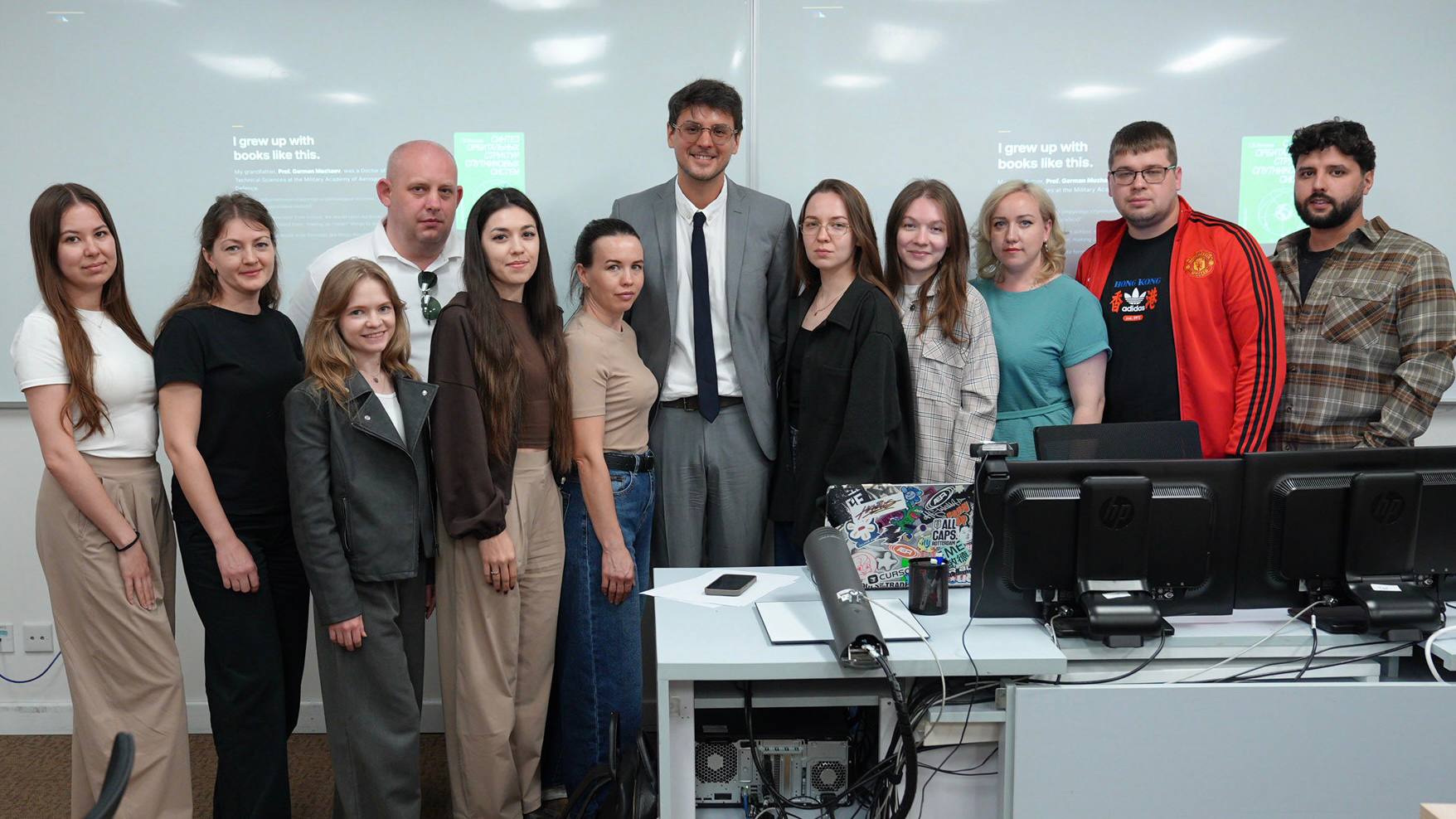
My March 2026 masterclass at HKU covered finding source material and using it in AI-assisted research. The session included demonstrations of extracting and searching documents, then using that material in further work. It is a useful example to inspect if your question is how to work with evidence, rather than how to ask a chatbot for a polished answer.
For an individual session, bring a small, shareable version of the problem. A public paper and a question you cannot resolve is more useful than a general request to learn AI. We can agree on what a good result should contain and where the source checks belong.
If you need an assessed qualification, compare the university programmes below. My offer here is instruction around your task.
Choose a short course for a bounded skill
HKPC’s Generative AI: From Raw Data to Compelling Reports & Infographics covers data preparation and turning results into reports or presentations. Its published syllabus includes checking generated output for accuracy. The listed session is 2 December 2026. HKPC course outline .
That is a reasonable course to investigate if reporting is the job you want to practise. Ask how much of the session involves your own work, whether you use a supplied dataset and which accounts you need. The wider HKPC catalogue includes other application areas, so choose the relevant syllabus rather than the broadest title.
Choose technical study when you want to build
HKU SPACE’s Certificate for Module (Applications of GenAI and Python in Finance and Business) combines Python with business applications of generative AI. The published November 2026 intake includes laboratory classes, an in-class exercise and a group presentation. The award requires passed assessments and at least 70% attendance. Applicants normally need an Advanced Diploma, Higher Diploma or Associate Degree taught and assessed in English; equivalent qualifications are considered individually. Programme and entry requirements .
Consider it when you want structured study in that subject area and meet the entry requirements. Ask the course team how much programming practice is expected outside class.
CUSCS’s LLM application course covers document retrieval, chatbot deployment and evaluation, with fine-tuning also on the syllabus. Its listed intake starts on 2 November 2026. Despite including Python basics among its topics, it expressly requires good Python knowledge. CUSCS course outline .
If you have never run a Python script, settle that gap before enrolling. Ask for a sample preparatory exercise. Being able to follow a demonstration on screen is a weaker starting point than being able to repair your own code when it fails.
Try a free introduction before committing
For a first look at the subject, the University of Helsinki’s online AI collection includes Elements of AI. Its course materials are free and available without formal enrolment. This is an online route you can use from Hong Kong, rather than a local classroom course. University of Helsinki AI collection .
Work through a section and write down what remains confusing. That gives you a better reason to pay for teaching: feedback on a particular gap, or a structured path you want help completing.
Make the time commitment concrete
If you have three months, define the result more narrowly than learning AI. For a document workflow, that might mean answering a recurring question with source references you can check. For a technical project, it might mean building a small application and recording where its answers fail.
Before booking, ask what learners submit and who reviews it. Check the teaching language separately from the language of the slides. Include tool subscriptions and practice time when comparing the commitment.
For a company-wide programme, use the separate corporate AI training guide . For your own project, send me the task and what you have tried . We can use that to decide what a session should cover.
Interested in this?
Learn about AI Education →